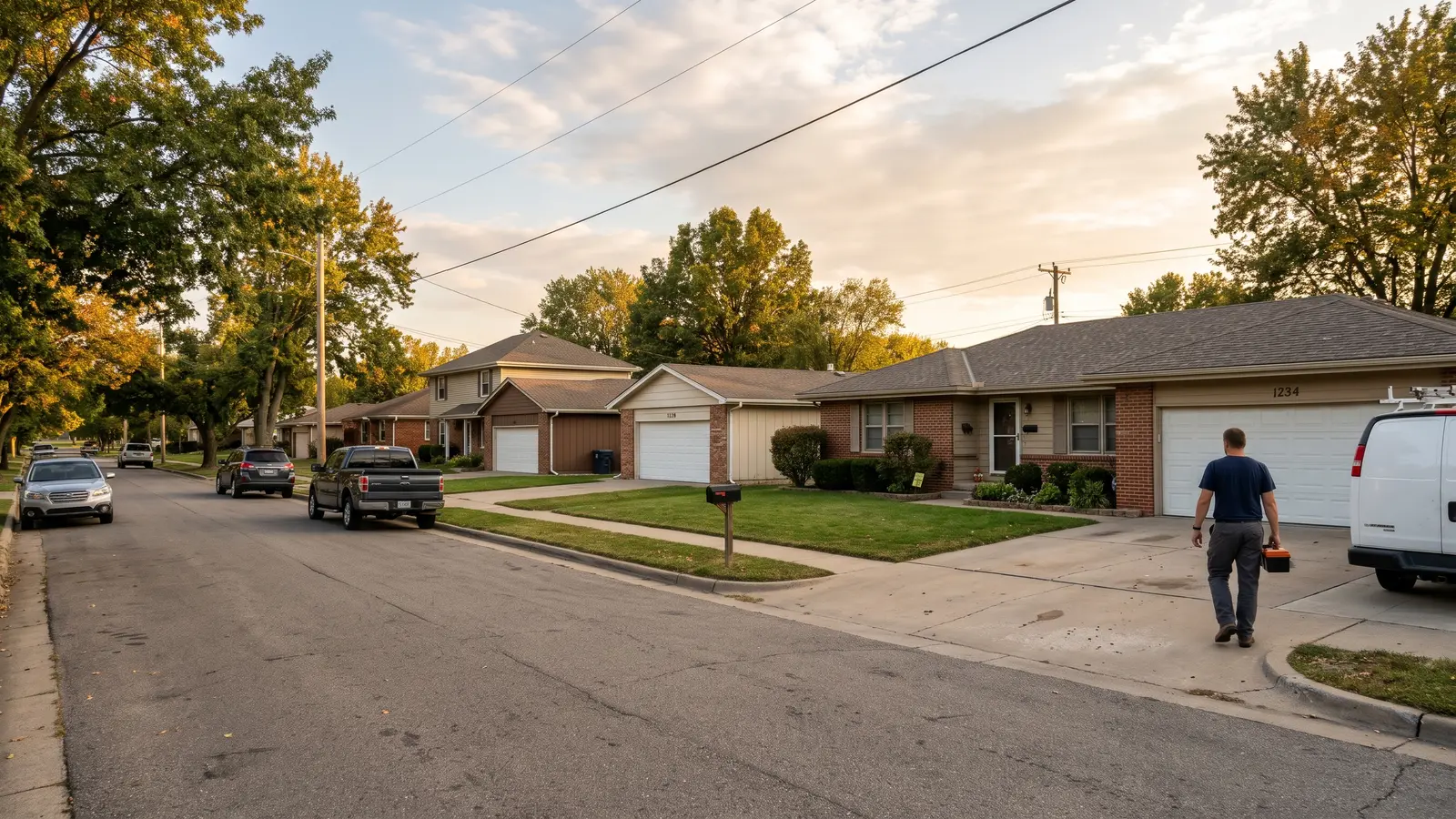
Why won’t my garage door close?
When a garage door refuses to close, the cause is usually small. The opener has safety features that stop or reverse the door if something seems wrong, and most “won’t close” calls come down to one of those features doing its job. Work through the safe checks below in order. If you reach a step that involves springs, cables or a crooked door, stop there and call us.
What does a blinking light on the garage door opener mean?
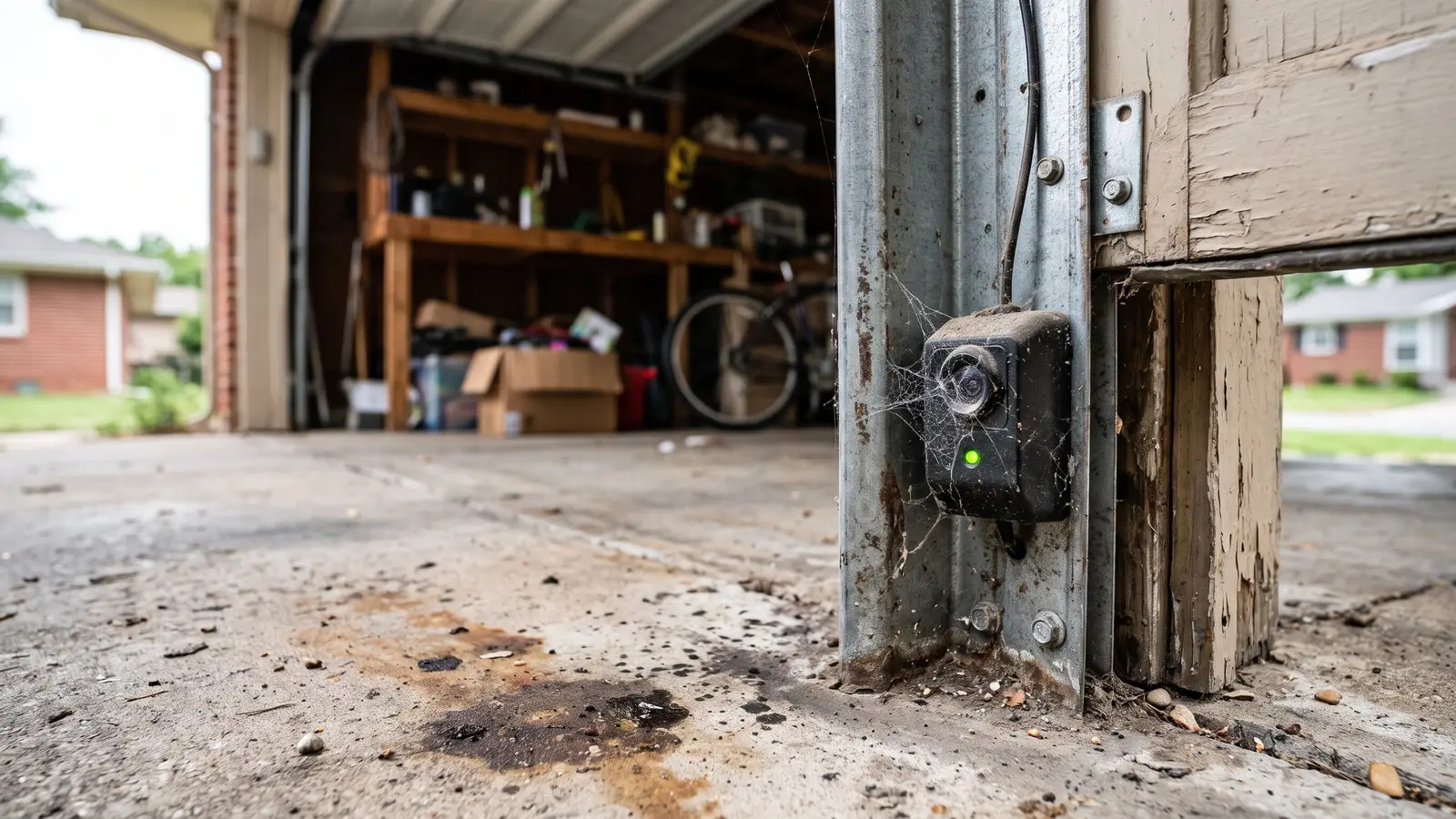
On most openers, a blinking light (on the opener motor, the wall control, or both) means the safety sensors aren’t seeing each other. The sensors are the two small units mounted a few inches above the floor on each side of the door. One sends an invisible beam, and the other receives it. If the beam is blocked or the sensors are out of line, the door won’t close.
Some openers also blink a code that points to a specific fault. Your opener’s manual or the label on the motor will explain the codes for your model.
How do you fix garage door sensors?
This is the most common fix, and it’s safe to do yourself:
- Look at both sensor lights. Usually one has a steady light all the time, and the other is steady only when it sees the beam. A blinking or dark receiving light means misalignment.
- Clear the path. Trash cans, boxes, tools, leaves and even cobwebs can block the beam.
- Clean the lenses with a soft, dry cloth. Dust and spider webs are common in Wichita garages, and low morning sun can also shine straight into a sensor and confuse it.
- Realign the sensor. Loosen the wing nut or bracket, aim it at the other sensor until its light goes steady, and tighten it again. A bumped bracket is a common cause.
- Check the wires. Look for loose, chewed or pinched wires running to each sensor.
If you’re still stuck, unplug the opener for about a minute and plug it back in, then try again.
Is the lock button turned on?
Many wall controls have a lock or vacation button that disables the remotes. If the door works from the wall button but not from the remote or keypad, check for a lit lock icon on the wall control and turn it off. Your manual will show how for your model.
Why does the garage door close and then go back up?
If the door starts down and reverses before (or just after) it touches the floor, the opener thinks it hit something. Common causes:
- Sensors losing the beam partway through the close
- Close-limit setting that tells the opener the floor is lower than it is, so the door hits the ground and reverses
- Force setting set too low for the door’s weight
- Binding in the tracks, a stiff roller or a bent track making the door harder to push down
- Weather. A cold snap stiffens grease and weatherseal, and a door that was barely in adjustment can start reversing
Limit and force adjustments are in the opener settings and vary by brand. Small adjustments are covered in the opener manual. If the door is reversing because it’s binding or heavy, the problem is the door, not the opener, and turning up the force can hide a safety issue. That’s a good time to call for opener repair or a tune-up.
Why will the door only close when I hold the button down?
On many openers, holding the wall button overrides the sensors and lets the door close slowly. If that’s the only way it closes, the sensors are almost certainly the cause. Fix them using the steps above. Don’t make holding the button a habit, because the safety reverse won’t protect a child, pet or car in the doorway.
Is the remote the problem?
If the door closes from the wall button but not the remote:
- Replace the remote battery
- Check that the lock button isn’t on
- Try another remote or the keypad
- Reprogram the remote using the “learn” button on the opener (see your manual)
If none of the remotes work and the wall button does, the opener’s receiver or logic board may need attention.
Is the opener getting power?
If nothing happens at all, check that the opener is plugged in, the outlet works (plug in a lamp), and the breaker or GFCI outlet hasn’t tripped. After a power outage, some openers need a reset.
Is something in the track?
With the door closed if possible, look along both tracks for stones, hardware, a dent or a bend. Clear debris by hand with the opener unplugged. A slightly bent track or a roller that’s popped out is a job for a technician, because the door can come off track and fall. See cable and track repair.
Could it be a broken spring or cable?
Yes, and this is where DIY stops. Signs include:
- A loud bang from the garage
- A visible gap in the spring above the door
- A cable hanging loose or tangled at the bottom corner
- The door sitting crooked, higher on one side
- The opener humming or lifting a few inches and stopping
Torsion springs hold enough tension to cause serious injury, and the cables are attached to that tension. Don’t adjust or replace them yourself, and don’t keep running the door. Our spring replacement cost guide explains what a fix costs. A typical spring repair in Wichita runs $200 to $500.
What does the red emergency release cord do?
The red cord hanging from the opener rail disconnects the door from the opener so you can move it by hand, for example during a power outage. Use it with care:
- Only pull it when the door is fully closed if you can. A door with a broken spring or cable can fall fast once it’s released in the open position.
- Don’t lift a door by hand if a spring is broken. It’s far heavier than it looks.
- To reconnect, pull the cord again (or toward the door on some models) and run the opener. It will catch the trolley on its next cycle.
Which checks are safe, and when should you call a pro?
| Safe to check yourself | Call a technician |
|---|---|
| Clean and realign sensors | Broken torsion or extension spring |
| Clear the sensor beam and tracks | Loose, frayed or snapped cables |
| Lock button on the wall control | Door crooked or off track |
| Remote batteries and reprogramming | Bent track or broken rollers |
| Outlet, breaker, unplug-and-reset | Opener humming, grinding or stripped gear |
What if the door is stuck open overnight?
A door stuck open is a security problem. Calls are answered 24/7, and a door stuck open or a car trapped inside is prioritized. Emergency garage door repair typically runs $150 to $600, and any after-hours fee is quoted before work. Call (316) 330-0609, or see our repair cost guide for typical prices.